Archaeologist

About this class
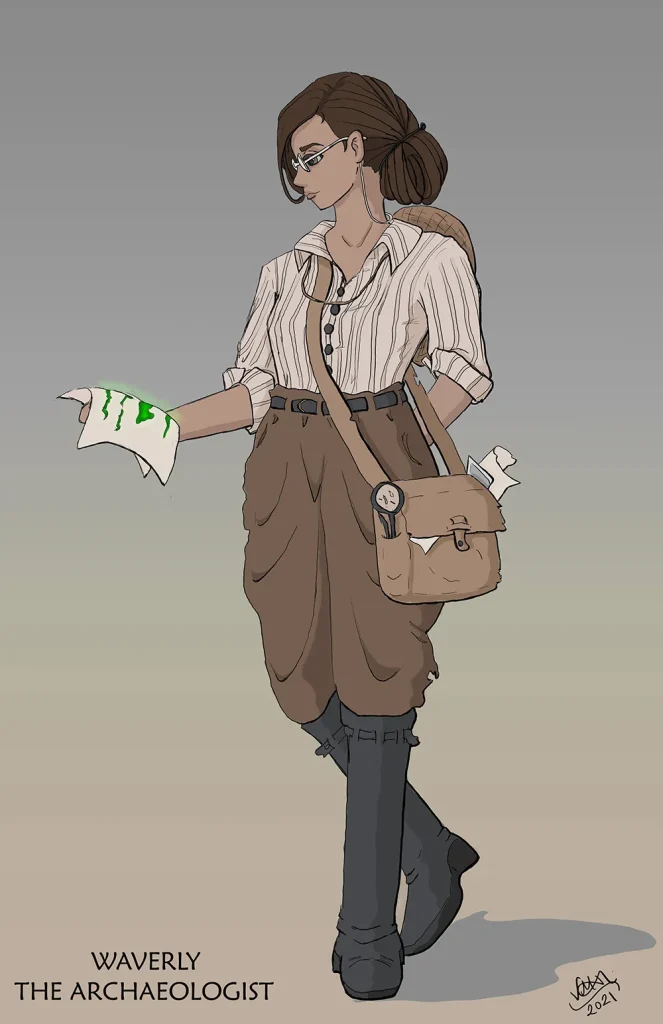
Archaeologists are magical scholars who explore forgotten places, uncover lost knowledge, and use their understanding of the past to unlock ancient powers. Play the Archaeologist if you want to explore ancient ruins, decipher forgotten secrets, and use knowledge and magic to overcome the dangers of the past.
Included subclasses


Domains
 Codex
Codex
 Sage
Sage
Starting stats
Hope feature
Class features
-
Arcane Appraisal
When you encounter an unknown item, you have Advantage on Rolls made to investigate, identify, or understand it. During a rest, you can take a free Downtime Action to identify an unknown item and learn its properties.
-
Research Papers
At Tier 1, you gain one Research Paper. You gain an additional Research Paper at Tiers 2, 3, and 4. When you create a Research Paper, write a word or short phrase describing a subject you are studying, such as Ancient Undead, Dwarven Architecture, Elementals, or Lost Civilizations, etc. When you make a Roll involving a subject covered by one of your Research Papers, you have Advantage.
Once per session, you can update one Research Paper, replacing its subject with a new word or short phrase.
Class items
- A collection of notes, sketches, maps, and translations from your expeditions.
- Brushes, chisels, and other instruments for examining ancient sites and artifacts.
Character questions
Background prompts
Connection prompts
Subclass cards
Printable via header menu



Relic Hunter
Foundation
SPELLCAST TRAIT: Finesse
Antique Expertise: When you encounter an unknown item, you have Advantage on Rolls made to investigate, identify, or understand it. During a rest, you can take a free Downtime Action to identify an unknown item and learn its properties.

Relic Hunter
Specialization
Reliquary Savant: When you use an item you have identified, you can spend 1 Hope to maximize one die rolled as part of its effects or damage.
Trapsmith: When you would trigger a trap, make an Agility Reaction Roll against the trap's Difficulty. On a success, you avoid its effects and discover the trap's mechanism. After discovering a trap, you have Advantage on Rolls made to disable or bypass it.
Relic Hunter
Mastery
Fortune Finder: When you discover a hidden object, passage, or other secret while exploring, gain a Hope. When you make a Presence Roll to barter, you have Advantage.
Temple Runner: When you would mark HP from a trap or environmental hazard, you can mark a Stress instead. If you do, you avoid the damage and immediately move to Close range.

Wildscribe
Foundation
SPELLCAST TRAIT: Knowledge
Runic Inscription: During a rest, you can inscribe one of the following Runes onto yourself, an object, or a surface you can touch. You can have only one Rune inscribed at a time.
Beast Rune: You have Advantage on Agility, Finesse, or Strength Rolls, or Animal Handling.
Element Rune: When you succeed on an attack, mark a Stress to deal an additional 1d8 magic damage.
Nature Rune: When you restore HP or Stress, mark a Stress to restore an additional 1d4.
Celestial Rune: When you fail a Knowledge, Instinct, or Presence Roll, mark a Stress to reroll your Duality Dice and use the new result.
Wildscribe
Specialization
Ancient Tongues: During a rest, you can study a language you have encountered. You can understand and communicate in any language you have studied. Once per session, you can mark a Stress to understand and communicate in a language you have not studied until the end of the scene.
Living Script: You can have up to two different Runes inscribed at once. Your Runic Inscription can now be placed on a willing creature. While a creature bears your Rune, you can communicate simple thoughts with it while within Far range.
Runic Ward: When a creature bearing one of your Runes must make a Reaction Roll, you can mark a Stress to give them Advantage on it.
Wildscribe
Mastery
Greater Runes: You can have up to three different Runes inscribed at once. You also learn two rare Runes:
Moon Rune: Your Spellcast Rolls do not cause you to lose the Hidden condition.
Star Rune: When you make a Roll using your Spellcast Trait, you can mark a Stress to add 1d8 to the result.
Runic Recasting: Once per scene, you can change one of your inscribed Runes during a Spotlight instead of during a rest. When you change a Rune, you can activate its effect without marking Stress.
Archaeologist
Archaeologists are magical scholars who explore forgotten places, uncover lost knowledge, and use their understanding of the past to unlock ancient powers. Play the Archaeologist if you want to explore ancient ruins, decipher forgotten secrets, and use knowledge and magic to overcome the dangers of the past.
Domains
Codex + Sage
Starting Evasion
10
Starting Hit Points
6
Class Items
- • A collection of notes, sketches, maps, and translations from your expeditions.
- • Brushes, chisels, and other instruments for examining ancient sites and artifacts.
Archaeologist’s Hope Feature
Wild Bond : Spend 3 Hope to inscribe a magical mark onto a beast, plant, or elemental you can touch. Until your next rest, it considers you a trusted companion, understands your speech, and follows your reasonable requests. You can sense its general direction while it remains within Far range.
Class Features
Arcane Appraisal
When you encounter an unknown item, you have Advantage on Rolls made to investigate, identify, or understand it. During a rest, you can take a free Downtime Action to identify an unknown item and learn its properties.
Research Papers
At Tier 1, you gain one Research Paper. You gain an additional Research Paper at Tiers 2, 3, and 4. When you create a Research Paper, write a word or short phrase describing a subject you are studying, such as Ancient Undead, Dwarven Architecture, Elementals, or Lost Civilizations, etc. When you make a Roll involving a subject covered by one of your Research Papers, you have Advantage. Once per session, you can update one Research Paper, replacing its subject with a new word or short phrase.
Archaeologist Subclasses
Choose either the Relic Hunter or Wildscribe subclass.
Relic Hunter
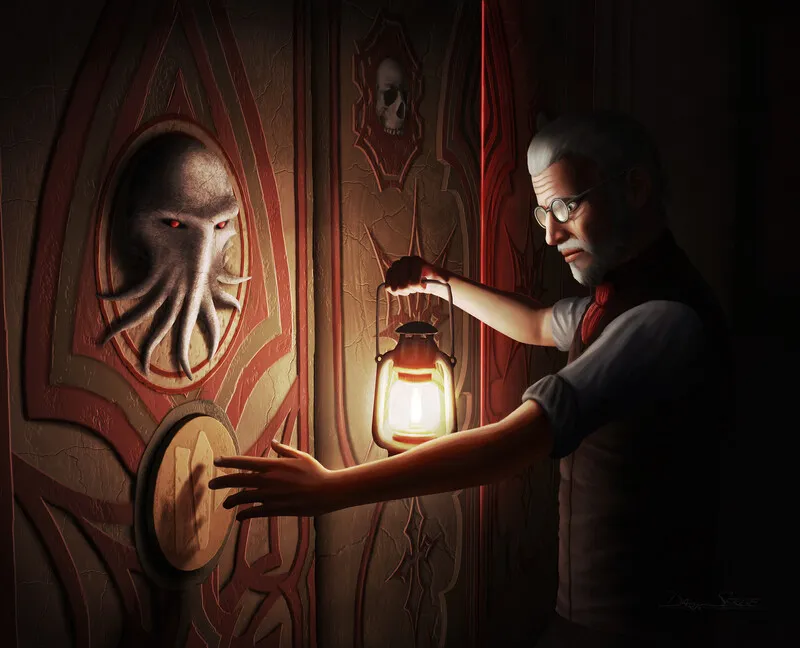
Play the Relic Hunter if you want to brave ancient ruins, outwit deadly traps, and recover powerful artifacts from forgotten places.
Spellcast Trait
Finesse
Foundation Features
Antique Expertise: When you encounter an unknown item, you have Advantage on Rolls made to investigate, identify, or understand it. During a rest, you can take a free Downtime Action to identify an unknown item and learn its properties.
Specialization Feature
Reliquary Savant: When you use an item you have identified, you can spend 1 Hope to maximize one die rolled as part of its effects or damage.
Trapsmith: When you would trigger a trap, make an Agility Reaction Roll against the trap's Difficulty. On a success, you avoid its effects and discover the trap's mechanism. After discovering a trap, you have Advantage on Rolls made to disable or bypass it.
Mastery Feature
Fortune Finder: When you discover a hidden object, passage, or other secret while exploring, gain a Hope. When you make a Presence Roll to barter, you have Advantage.
Temple Runner: When you would mark HP from a trap or environmental hazard, you can mark a Stress instead. If you do, you avoid the damage and immediately move to Close range.
Wildscribe
Play the Wildscribe if you want to decipher forgotten languages, inscribe ancient magic, and command the power hidden within forgotten civilizations.
Spellcast Trait
Knowledge
Foundation Features
Runic Inscription: During a rest, you can inscribe one of the following Runes onto yourself, an object, or a surface you can touch. You can have only one Rune inscribed at a time.
Beast Rune: You have Advantage on Agility, Finesse, or Strength Rolls, or Animal Handling.
Element Rune: When you succeed on an attack, mark a Stress to deal an additional 1d8 magic damage.
Nature Rune: When you restore HP or Stress, mark a Stress to restore an additional 1d4.
Celestial Rune: When you fail a Knowledge, Instinct, or Presence Roll, mark a Stress to reroll your Duality Dice and use the new result.
Specialization Feature
Ancient Tongues: During a rest, you can study a language you have encountered. You can understand and communicate in any language you have studied. Once per session, you can mark a Stress to understand and communicate in a language you have not studied until the end of the scene.
Living Script: You can have up to two different Runes inscribed at once. Your Runic Inscription can now be placed on a willing creature. While a creature bears your Rune, you can communicate simple thoughts with it while within Far range.
Runic Ward: When a creature bearing one of your Runes must make a Reaction Roll, you can mark a Stress to give them Advantage on it.
Mastery Feature
Greater Runes: You can have up to three different Runes inscribed at once. You also learn two rare Runes:
Moon Rune: Your Spellcast Rolls do not cause you to lose the Hidden condition.
Star Rune: When you make a Roll using your Spellcast Trait, you can mark a Stress to add 1d8 to the result.
Runic Recasting: Once per scene, you can change one of your inscribed Runes during a Spotlight instead of during a rest. When you change a Rune, you can activate its effect without marking Stress.
Background Questions
Answer any of the following, or create your own.
—
Connections
Ask one of the following, or improvise.
—
Discussion
Be thoughtful and kind.

Remember to be respectful. Comments are moderated and should add to the discussion.