

Living Armor
Adversary overview
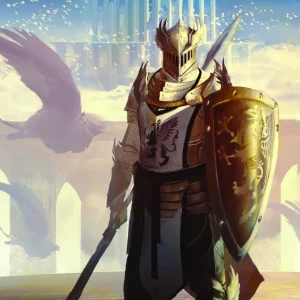
Dozens of mollusk like creatures piloting a mismatched assortment of armor.
The journal of monster hunter Alistair Wake has the following too say on animated armor, living armor, and broodwarden armor
“The tradition of binding magical spirits to armor to bring it too life as a soldier are nearly as old as armor, if not older with accounts of the wizard Nepenthes using them as a personal army to besiege the city of Iskaldur over 1300 years ago being are earliest clear example (a friend of mine claimed part of one of these animated soldiers was recovered recently, though I have yet to personally verify the truth of this).
Either way, this practice has survived so long due to a simple reason, wizards are frail and ill-suited for altercation, and yes ambitious and haughty. Thus, every inspiring archmage and their mother has found need to bolster their magical aptitude with artificial soldiery, and animated armor serves the role well, without the moral qualms involved in the art of necromancy others might turn too. Of course, like necromancy, it is not uncommon for the magic controlling a suit of animated armor too fall into disarray, and this is invariably fatal for both the armor, and should they still be both alive and present, the armors controller.
Should one find need to find an animated armor, it is only so much stronger than a common soldier (though more dangerous varieties are often created), vulnerable to magical attack, and countermagic or killing its controller can be effective at dealing with it, provided one exercises the caution required to avoid being hit shortly afterwards.
Stranger though, than animated armor, is its cousin living armor. Often mistaken for unusual animated armors, they were not recognized as a distinct category of creature until recently by a particularly precocious adventure I had the privillege of meeting once. These creatures are actually colonies of mollusks inhabiting normal armor as a form of protection. No less dangerous than animated armor, and almost always encountered in groups, these creatures can provide a real danger to beginning adventurers. Thankfully, these creatures don’t seem to have interest in mortals beyond what is required to defend themselves or their eggs. I’ve also been told they are quite appetizing, though I have turned down offers to have them cooked for me. [Editors Note: At the time of finding this journal a small slip of paper was stuffed in this page, which read as follows: Remember to ask for recipe for that cockatrice stew next time]”
Stat block
Standard attack
Features
Passives
-
Steel Shell
The Armor is resistant to physical damage.
Actions
Reactions
-
Guardianstress 1
Whenever a creature within Close range would take damage from an attack, the Armor may mark a Stress to take damage instead as if they were the target of the attack.
Motives & tactics
Experiences
Living Armor
Tier 1 standard
Dozens of mollusk like creatures piloting a mismatched assortment of armor.
Motives & Tactics: Protect, Hunt
Difficulty: 11 | Thresholds: 4 / 8 | HP: 4 | Stress: 3
ATK: +1 | Slam: Melee | 1d8+1 Physical
Experience: —
HP:
Stress:
Features
Steel Shell – Passive: The Armor is resistant to physical damage.
Guardian – Reaction: Whenever a creature within Close range would take damage from an attack, the Armor may mark a Stress to take damage instead as if they were the target of the attack.

Living Armor
The journal of monster hunter Alistair Wake has the following too say on animated armor, living armor, and broodwarden armor
“The tradition of binding magical spirits to armor to bring it too life as a soldier are nearly as old as armor, if not older with accounts of the wizard Nepenthes using them as a personal army to besiege the city of Iskaldur over 1300 years ago being are earliest clear example (a friend of mine claimed part of one of these animated soldiers was recovered recently, though I have yet to personally verify the truth of this).
Either way, this practice has survived so long due to a simple reason, wizards are frail and ill-suited for altercation, and yes ambitious and haughty. Thus, every inspiring archmage and their mother has found need to bolster their magical aptitude with artificial soldiery, and animated armor serves the role well, without the moral qualms involved in the art of necromancy others might turn too. Of course, like necromancy, it is not uncommon for the magic controlling a suit of animated armor too fall into disarray, and this is invariably fatal for both the armor, and should they still be both alive and present, the armors controller.
Should one find need to find an animated armor, it is only so much stronger than a common soldier (though more dangerous varieties are often created), vulnerable to magical attack, and countermagic or killing its controller can be effective at dealing with it, provided one exercises the caution required to avoid being hit shortly afterwards.
Stranger though, than animated armor, is its cousin living armor. Often mistaken for unusual animated armors, they were not recognized as a distinct category of creature until recently by a particularly precocious adventure I had the privillege of meeting once. These creatures are actually colonies of mollusks inhabiting normal armor as a form of protection. No less dangerous than animated armor, and almost always encountered in groups, these creatures can provide a real danger to beginning adventurers. Thankfully, these creatures don’t seem to have interest in mortals beyond what is required to defend themselves or their eggs. I’ve also been told they are quite appetizing, though I have turned down offers to have them cooked for me. [Editors Note: At the time of finding this journal a small slip of paper was stuffed in this page, which read as follows: Remember to ask for recipe for that cockatrice stew next time]”
Domains
—
Starting Evasion
—
Starting Hit Points
—
Class Items
—
Living Armor Subclasses
No subclasses available.
—
Background Questions
Answer any of the following, or create your own.
—
Connections
Ask one of the following, or improvise.
—
Discussion
Be thoughtful and kind.
Remember to be respectful. Comments are moderated and should add to the discussion.